…instructions for safe long-term storage. If you want to keep the jars in your pantry all winter, it is best to follow a proven processing time tailored to the specific type of fruit and jar size.
Home canning is about more than just creating a vacuum seal. Heat processing also destroys microorganisms that could cause the food to spoil.
Why do plums shrink after canning?
If you haven’t tried this method before, you might be surprised when you open your first jar to find that the plums no longer fill the entire volume.
This is completely normal.
Fresh plums have a high water content; the heat causes their flesh to soften and shrink, releasing natural juices that collect at the bottom and in the gaps between the pieces of fruit.
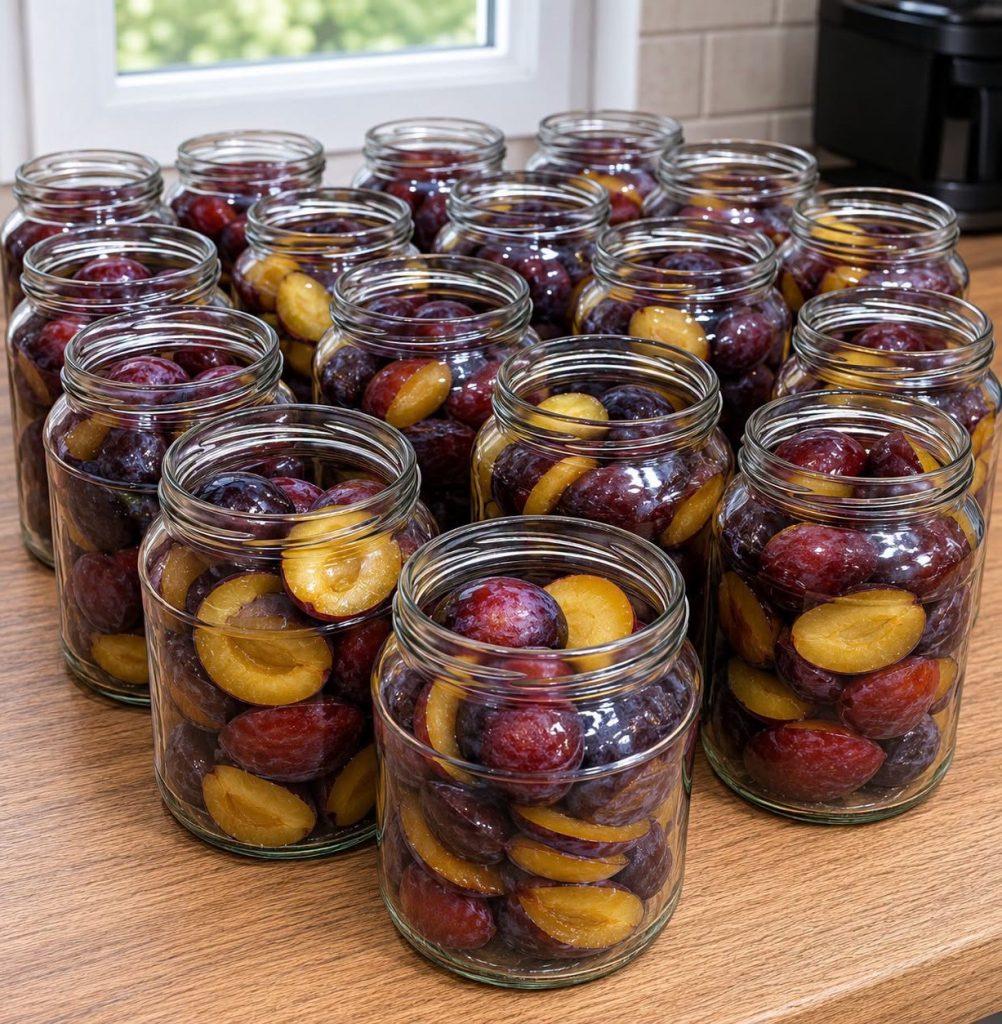
That is why it is a good idea to pack the fruit very tightly into the jars before canning. However, be careful not to crush or press down too hard on them. Arrange the layers…
Simply place them in one by one, pressing down lightly on each layer.
Which plums are best for this recipe?
The best plums are sweet, aromatic, and fully ripe, yet still hold their shape.
Plums that are too hard won’t be as sweet or aromatic after cooking. Very soft, overripe fruit may turn into mush when heated. The plums are perfect, and you will enjoy them too.
For Complete Cooking STEPS Please Head On Over To Next Page Or Open button (>)